EP 120: Q&A – Homeschooling with Bad Attitudes, FOMO, and an Intense Desire to Quit

Last week in Episode 119, I answered a slew of homeschooling questions but ran out of time before I could address them all. So I’m tackling the second half of that long (and ever growing) list of queries, including:
- How should I respond when my kids start exhibiting bad attitudes?
- What’s the best way to deal with a resistant learner?
- How can I help my child become less socially awkward?
- What should I do when my kids beg to quit homeschooling?
- Where do I find motivation when I want to quit homeschooling?
- How do I nurture my marriage when homeschooling depletes me?
I hope you’ll listen in (or peruse the complete transcript from EP 120 below today’s show notes) and be encouraged!
Show Notes
VERSES CITED:
- Proverbs 22:6 – “Train up a child in the way he should go, Even when he is old he will not depart from it.”
- Matthew 5:22 – “But I tell you that anyone who is angry with a brother or sister will be subject to judgment. Again, anyone who says to a brother or sister, ‘Raca,’ is answerable to the court. And anyone who says, ‘You fool!’ will be in danger of the fire of hell.”
- Romans 12:2 tells us, “…do not be conformed to this world, but be transformed by the renewing of your mind, so that you may prove what the will of God is, that which is good and acceptable and perfect.”
- Philippians 1:6 – “For I am confident of this very thing, that He who began a good work among you will complete it by the day of Christ Jesus.”
- Galatians 6:9 – “And let us not grow weary in doing good, for in due season we shall reap if we don’t lose heart.”
- James 1:5 – “But if any of you lacks wisdom, let him ask of God, who gives to all men generously and without reproach, and it will be given to him.”
- 1 Corinthians 15:58 – “Therefore, my beloved brothers, be steadfast and immovable. Always excel in the work of the Lord, because you know that your labor in the Lord is not in vain.”
- Jeremiah 33:3 – “‘Call to Me, and I will answer you, and show you great and mighty things, which you do not know.”
- James 3:16 – “For where jealousy and selfish ambition exist, there is disorder and every evil thing.”
- 1 Peter 2:1 – “Therefore, rid yourselves of all malice and all deceit and hypocrisy and jealousy/envy [depending on which translation you read] and all slander….”
- Exodus 20:17 – “You shall not covet your neighbor’s house. You shall not covet your neighbor’s wife, or his manservant or maidservant, or his ox or donkey, or anything that belongs to your neighbor.”
- Proverbs 14:30 – “A heart at peace gives life to the body, but envy rots the bones.”
- 1 Timothy 6:6 – “Of course, godliness with contentment is great gain.”
- 2 Corinthians 10:12 – “We do not dare to classify or compare ourselves with some who commend themselves. When they measure themselves by themselves and compare themselves with themselves, they are not wise.”
- Proverbs 11:24-25 – “One gives freely, yet gains even more; another withholds what is right, only to become poor. A generous soul will prosper, and he who refreshes others will himself be refreshed.”
- 1 Corinthians 7:3-5 – “The husband should fulfill his marital duty to his wife, and likewise the wife to her husband. The wife does not have authority over her own body, but the husband. Likewise the husband does not have authority over his own body, but the wife. Do not deprive each other, except by mutual consent and for a time, so you may devote yourselves to prayer. Then come together again, so that Satan will not tempt you through your lack of self-control.
- Ephesians 3:20-21 – “Now to him who is able to do immeasurably more than all we ask or imagine, according to his power that is at work within us, to him be glory in the church and in Christ Jesus throughout all generations, for ever and ever! Amen.”
RELATED LINKS:
- EP 119: Q&A – Homeschool Schedules, Records, and Teaching Multiple Ages
- CLEP and Dual Credit (Get a Headstart on College)
- Best Books for Boys
- EP 92: Unexpected Benefits of Big Family Living
- EP 8: Scientific Proof Having Babies is Good for You
- EP 1: How to Find a Good Mentor
- EP 82: The Secret to Cultivating Contentment
- M is for Mama: Mom Friends & Grace Girls (How One Led to the Other)
- Kids Bowl Free
- Kids Skate Free
- TACHE (Tyler Area Christian Home Educators)
- Praying for Friends (Free Printable Guide)
- Praying for My Enemies (Free Printable Guide)
- Love Your Husband/ Love Yourself (my marriage book)
- 7 Reasons to Prioritize Sex in Marriage
- Why I Keep Saying “Yes” to Sex
STAY CONNECTED:
- Subscribe: Flanders Family Freebies -weekly themed link lists of free resources
- Instagram: @flanders_family – follow for more great content
- Family Blog: Flanders Family Home Life – parenting tips, homeschool help, printables
- Marriage Blog: Loving Life at Home– encouragement for wives, mothers, believers
- My Books: Shop Online – find on Amazon, at Barnes & Noble, or through our website

Q&A: Bad Attitudes, FOMO, and Other Temptations to Quit Homeschooling
Complete Transcript for Episode 120
Hello, Friend. Welcome to Episode 120 of Loving Life at Home. Last week, I answered a slew of homeschooling questions on the podcast. I’ll link that episode in the show notes in case you missed it. But this week, I’m tackling the second half of that long (and ever growing) list of queries, including:
- How should I respond when my kids start exhibiting bad attitudes?
- What’s the best way to deal with a resistant learner?
- How can I keep my child be less socially awkward?
- What should I do when my kids beg to quit homeschooling?
- Where do I find motivation when I want to quit homeschooling?
- How do I nurture my marriage when homeschooling depletes me?
So let’s get started with Question 1:
Q-1: Help! My kids are developing bad attitudes!
One sweet mama writes:
Dear Jennifer:
Woah! Most parenting advice revolves around newborns, toddlers and teens – but I’ve yet to find anyone who talks about the challenges of early elementary! My 2 older kiddos are so good at chores/responsibilities, very physically independent, and genuinely kind kids who typically stay out of trouble – but the slight attitudes they are starting to show – eye rolling, sighing, having an unhappy expression when they are corrected – really drive me up the wall!
Even the physical manifestation of these things I can handle; it’s when I gently correct them and they still have a cruddy attitude that really gets to me. Not to mention them taking teasing too far and getting jokingly bossy with us as parents that crosses the line into disrespect (we are a family that enjoys joking but learning boundary lines and appropriate teasing is a work in progress).
It’s like mini-teenagedom over here and I don’t understand why it seems no one talks about it. What am I missing? Did I not parent as well in the toddler stage as I thought? – I don’t mean that pridefully but from a discipline and expectation standpoint. 😅 What are your thoughts on this age group?
A-1: Address It Promptly, Privately, and with Grace
Well, I have a lot of thoughts about this. I’d begin by recommending you…
1) Consistently notice and praise the things your children are doing well
First, by your own admission, you have generally kind, responsible kids who don’t give you much trouble. That is a good thing!
Be sure to commend them for all the things they are doing well, especially in the areas that are mostly under their control:
- working hard
- being kind
- showing thoughtfulness
- attending to the chores cheerfully
- etc.
Let them know you notice all those signs of maturity. Your acknowledgement and appreciation of their progress in such areas will make it much easier for them to hear your concerns about that other matter.
2) Lovingly point out areas that need improvement
Second, you are right to be concerned with these first signs of shifting attitudes. You want to address them early, while they’re young, before the sighing and grumbling and eyerolling have an opportunity to take root and grow into something worse
But I’d encourage you to address these behaviors with grace and, ideally, in private. Assume the best, especially the first time you bring the matter to their attention. They may not realize what they are doing or how it is coming across.
3) Watch for negative influences
The third thing I’d recommend is to consider things that might be influencing your daughters:
- TV shows
- friends
- social media
- books they’re reading
- etc.
Bring the suspected connections to their attention, and—if that isn’t enough to curb their effect—then purge anything that seems to feed bad attitudes or make them worse.
An example NOT worth emulating…
When I was growing up, my family loved watching The Carol Burnett Show. She and Vicki Lawrence and Harvey Korman and Tim Conway were such a funny team, they would have us in stitches every time we tuned in.
But there was one ongoing skit they did where Vicki Lawrence played an older mom and Carol Burnett played her daughter Eunice. And, sadly, Eunace was not very kind or respectful to her mother. In fact, whenever she felt especially exasperated, she’d say, “Mama, you fool!” and then go on to chide her mother for whatever it was Eunice thought she’d done wrong.
Well, like the reader who sent me this message, I came from a family who enjoys joking, but—like her daughters—learning appropriate boundary lines was a work in progress. And, when I was in maybe third or fourth grade, I definitely crossed that line, because—I’m so ashamed to admit it as an adult—but I took a cue from Eunice and actually said her same line to my own sweet mother. “Mama, you fool!” Not just once, but twice.
I’m 100% certain my mother heard me the first time, but it was over the phone while she was at work, so she let it slide for the moment. But I imagine she devoted the matter to prayer, because when I delivered the same line to her face a few days later, she was ready.
She was ready, but she was also very gracious. She knew exactly where the idea came from for me to address her that way. And she gave me the benefit of the doubt that I didn’t realize how awful it sounded. But she also let me know in no uncertain terms that such statements would not be tolerated in the future.
She explained that it was an offense God took seriously as well. And she backed that claim up with Scripture, referencing Matthew 5:22, where Jesus says, “But I tell you that anyone who is angry with a brother or sister will be subject to judgment. Again, anyone who says to a brother or sister, ‘Raca,’ is answerable to the court. And anyone who says, ‘You fool!’ will be in danger of the fire of hell.”
That is serious. And it certainly got my attention. And I never said such a horrible thing to my dear mother again.
So, if the “gentle corrections” you’ve previously given are having no effect on your daughters’ attitudes, I recommend you devote the matter to prayer, look up relevant passages in the Bible, sit them down in private, and have a frank discussion as to why their behaviors are problematic.
My next question, #2, is…
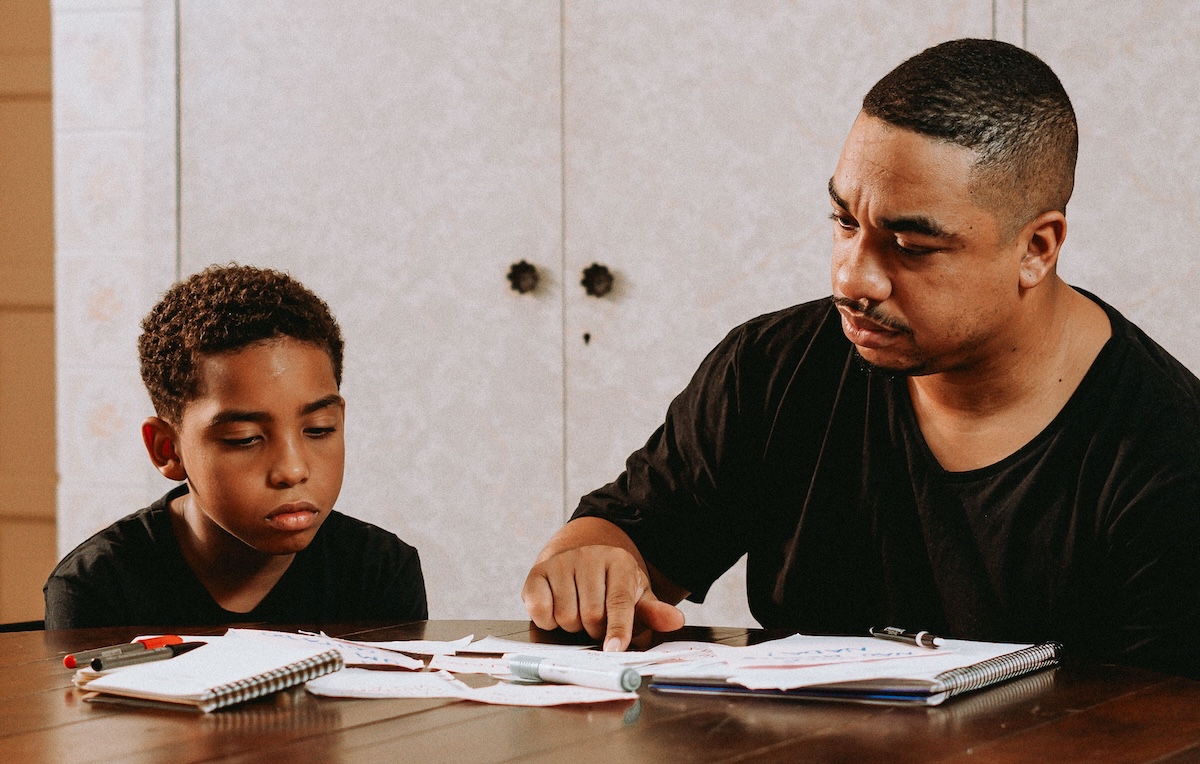
Q-2: What’s the best way to deal with a resistant learner?
Hi, Jennifer.
I love your blog. It’s one of the very few I read. Thank you.
I am praying for wisdom on how to better teach my 14-year-old son in our home school. He is incredibly smart but hates (and I mean hates) school. I would truly appreciate and be most thankful for any tips you might have on how to best help him get the education he needs and get back the love for learning he had at a younger age.
Grace and peace in abundance,
[and she signed her name]
A-2: Pray for insight and ask lots of questions
Well, this a pattern I’ve seen over and over again. I’ve watched countless friends and family members and various acquaintances deal with this problem over the years and have occasionally had to deal with the same dynamic in my own home—especially when my firstborn, our little guinea pig—got to be about that age, as I had no prior experience to assure me things would eventually settle down again on the other side of puberty. Ha!
Of course, there are probably as many contributing factors to this phenomenon as there are disinterested teens and exasperated mothers, but I’d like to discuss a few of the most common causes I’ve seen impact such cases.
Praying for wisdom is definitely a great place to start. Because it’s not enough to just recognize the fact that your boy who once loved learning now hates school with a passion. What you really need God’s help in understanding is why?
1) Does your son “hate school” because the work is too hard?
Does he have trouble understanding his lessons? If so, you may need to back up and review… or slow down and work on mastery.
Even if your son is “incredibly smart,” he may still encounter subjects that are a struggle for him. Maybe he’s great at math but hates reading. So watch out for that: Does he hate everything or just certain subjects?
If it’s the latter, you may need to take another pass at the parts that are giving him fits. But that’s the beauty of homeschooling… your child is not forced to stay lockstep with all his peers in every subject. He can slow down and take his time with a troublesome subject or progress quickly through one that come easily—which brings me to another question you need ask yourself:
2) Does your son “hate school” because the work is too easy?
Is he bored out of his mind while you keep assigning more and more workbook pages over stuff he mastered months ago?
If so, you need to pick up the pace. Skip ahead. Challenge him. Or find a new topic of study that really piques his interest and let him run with it.
Ask him what he’d like to study and find a way to add that topic in. Let him research it and write a paper. Or give an oral report. Or present a Power Point over what he learns. It’s okay if your school looks nothing like the public school down the street. Learning can still take place without workbooks and chalk boards and 55-minute class periods.
3) Does your son “hate school” because the work is inactive?
Does he have oodles of pent-up energy and no outlet for burning it off? If so, you may need to buy him a bicycle or sign him up for a sports team or find another way for him to get some strenuous exercise.
I once had a friend whose son was really struggling to learn his lessons as a young teen, so she signed him up for ice skating lessons. They lived in a big city and had easy access to that sort of thing, so she started taking him to practice bright and early before they began their school day.
He’d skate and spin and race around the rink until he was completely drenched in sweat, and then he’d be ready to sit still and do his homeschool lessons.
4) Does your son “hate school” because it keeps him offline?
Another thing that has stolen a lot of kids’ love for learning and caused them to “hate school” is screen addiction.
Most schoolbooks cannot even begin to rival the constant stimulation and novelty that kids experience online, whether they’re playing video games, watching YouTube videos, scrolling social media, or viewing pornography.
All these things are being actively pushed on our kids by various algorithms—so we need to be aware of such potential problems and guard against them.
You should certainly limit your son’s access to phones and tablets during schooltime. If he needs a computer for specific homework assignments, have him work on it in a common area where you can clearly see his screen and know how he’s spending his study time.
5) Does your son “hate school” because his lessons feel childish?
Of course, “hating school” may just be your 14-year-old son’s way of telling you he’s tired of being treated like a child.
That may be hard for a lot of mothers to hear, much less understand, but it is true. There comes a time in the life of almost every boy when he starts to think, at least subconsciously, “Ain’t no woman gonna tell me what to do.”
He may not say that in so many words, but Mom will sense it and may not like it. But the fact is, you should want your child to grow up and shoulder adult responsibilities. It’s especially important that you, as a mom, support and facilitate your teen’s transition into adulthood. It isn’t good for anybody—parents or children—when our kids fail to launch.
Your 14-year-old son is on the verge of manhood, and—whether he can articulate that fact or not—he longs to be treated like a man.
Just as you child is transitioning to adulthood, your approach to his education will likely need to undergo some transition, as well.
- Maybe your husband could take over some of your son’s homeschool instruction
- Maybe you could join a co-op that includes male teachers
- Maybe you could sign him up for online or dual credit classes at a local junior college
- Maybe you could assign independent study in preparation for CLEP tests [I’ll link a post in the show notes that explains those last two options in detail, in case you want to read more about them.]
- Maybe you could assign some audiobooks written and read by men: Brent Hanson’s The Men We Need, Alex and Bret Harris’s Do Hard Things, JC Ryle’s Thoughts for Young Men. I have a growing list of books—both fiction and non-fiction—that I’d recommend for boys this age to help them along the path to manhood. I’ll include a link in the show notes. Maybe you could assign select titles and discuss them with your son as he finishes them (or simply have him narrate them, Charlotte Mason style, or tell you what he most enjoyed about each book).
Anyway, I’d recommend talking through all these options with your son to see which appeals most to him. Let him know you love him and are committed to helping him succeed—not just academically, but at life.

Okay, my next message addresses a question on the mind of many a homeschool detractor: What about socialization? And it’s sometimes a concern of homeschooling parents, as well. Moms want to know…
Q-3: How can I help my child become less socially awkward?
Here’s one such letter I’ve received on this topic…
Hi Jennifer,
I hope you’re doing well. I’m a [homeschool mom] living in Canada. I have been immensely blessed by your podcast and the blog. It has convicted me to pray more for my children and also to be a more fun, joyful mom.
I would love to hear your thoughts and wisdom in two areas:
- On handling secular media: I grew up in a more strict environment where we didn’t watch any movies, not even good ones. Now, as a mom, I would like to take a more balanced approach to it but want to be wise in not being too permissive and swinging to the other side of the pendulum.
- Homeschooling and socialization: How do I help my more reserved child come out of his shell, make eye contact and speak more confidently? We’re praying and seriously considering homeschooling him this fall but the social aspect is what I’m fighting for peace over.
Once again, I appreciate all that you do. May God continue to bless you and your family and ministry.
Gratefully,
Charis
Q-3: Practice at Home and Provide Opportunities for Interaction
Well, I’m going to save the first part of her question on secular media for later. I’ve received several related messages from other moms, so I plan to address all of those in a separate episode on movies and media.
But I’ll tackle the second topic – on socialization — this week.
With regard to building confidence and communication skills in your kids, I’d recommend practicing a lot at home. We had to do this with a couple of our kids for whom making eye contact seemed excruciatingly difficult at a young age, although, if you were to meet them now, as adults, you’d never suspect such a thing was ever a struggle for them. They’re all great communicators and are very good about maintaining eye contact during conversations.
Of course, so many people in the up and coming generations are so constantly glued to a screen, many of their agemates might never notice, even if they hadn’t overcome that particular challenge. But that’s beside the point.
We want our kids to look people in the eye, and we hope God will give them lots of friends who also prioritize face-to-face conversations over staring at phones.
So, this is what we did to address the problem while they were young.
1) Explain the problem behavior
First, I let them know that a reluctance to make eye contact is often interpreted as an attempt to hide something. It makes a person seem untrustworthy when they won’t look you straight in the eye. And I didn’t want them to be sending that false signal to others, so we were going to work on overcoming that together.
2) Rehearse the proper behavior
Second, I’d remind them to look in my eyes whenever they were talking to me. We would practice, practice, and practice some more, and they eventually outgrew that tendency.
Sometimes it’s easier for kids to maintain eye contact when they’re listening than when they’re doing the talking. So keep that in mind and just give gentle reminders to keep returning to the eyes, even if they need to look off momentarily to collect their thoughts before speaking.
3) Provide plenty of opportunities to practice
Now, as far as the socialization aspect goes, keep in mind you normally don’t have to pick between isolating at home all day every day and turning your kids over to the local public school for 12-14 years of their lives. There is a lot of middle ground in between!
So don’t worry if your children’s friendships and interactions with others bear little resemblance to what the world considers necessary for proper socialization.
Romans 12:2 tells us,
“Do not be conformed to this world, but be transformed by the renewing of your mind, so that you may prove what the will of God is, that which is good and acceptable and perfect.”
Romans 12:2
“Blending in” is overrated. So is doing every little thing just like everyone else does it. As homeschoolers, we have a different goal in mind, so it makes sense that our process would be different, as well.
Between the two extremes of keeping your children in total isolation and sticking them in a classroom with 20-30 of their agemates for 8 hours a day, there is a wide range of options that can help teach them how to get along with others and relate to people of all ages – not just kids who were born in the same calendar year.
Admittedly, it’s a little easier not to feel isolated when you have a LOT of children. In a family of fourteen, like mine, there is always somebody around to talk to or play with. That’s one of the many, many benefits that come from having a large family. I’ll link some more in the show notes, in case you need some encouragement to expand your family.
Yet, even if you have an only child, you can still build a community if you take the matter to God in prayer and are intentional about seeking out other likeminded families.
In our city, there are so many opportunities open for homeschoolers to pick and choose from—including a variety of…
- homeschool co-ops
- choirs
- bands
- sports teams
- debate clubs
- book clubs
- drama clubs
- and the like
…that it would be impossible for any one student to do them all. There simply aren’t enough hours in the day.
But what if you live in an area that has no such options available? Then I’d suggest you prayerfully consider starting one yourself.
- Start something new: When I first moved to Tyler 30 years, I joined the only homeschool support group that was around in these parts back then (TACHE – Tyler Area Christian Home Educators) and almost immediately volunteered to write an email newsletter for the group, since that was something that wasn’t already being done at the time. I called it Mom’s Connect and used it to send announcements and reminders to local moms about activities in and around Tyler of interest to home schoolers. Only a handful of moms signed up for that service (email was still really new back then and not everybody used it – or even owned a computer to receive it on). But word spread, and within a few months, I had close to 500 homeschooling families from the Tyler area on my mailing list, which I ran for nearly five years before moving on to other projects.
- Open your home: You can also practice hospitality. Schedule events in your home and invite others to join in—we’ve done that regularly since we were first married, even when we lived in a tiny apartment with a hodgepodge of secondhand furniture we’d collected from garage sales and relatives’ storage buildings.
- Form a club: My thirdborn loved playing chess when he was younger, so for a couple of years, we hosted a chess club once a month in our home. We’ve hosted Independence Day celebrations and back-to-school brunches and caroling parties and Spanish posadas and Geography Bees book clubs and even staged our own zany Olympic games for family and friends.
- Host a play date: The group doesn’t have to be big to be a huge success, nor does the event need to be academic to be meaningful. Try inviting friends over for lunch or a playdate. Or ask everyone to pack their own picnic and meet at a local park or playground. Two or three families may be all you need to find the kind of fellowship and interaction and support and encouragement you’re looking for. And to provide the close friendships that will help pull your quiet and reserved kids out of their shell. We’ve repeatedly seen that kind of transformation firsthand.
- Invite others to join: Several years ago, my good friend Abbie Halberstadt contacted me about starting a girls’ craft club that would meet 2-3 times a month to make things and enjoy snacks and get to know one another better. I thought that was a great idea! We called the club Grace Girls and it was such a blessing, not only for our daughters but for the mothers, as well, who would visit with one another while whichever mom was hosting that week worked with the girls. I’m pretty sure Abbie has done a podcast episode about that whole experience. I’ll try to look it up and include a link in the show notes.
- Play pick-up sports: You might also try pick up sports. Our family used to play Ultimate Frisbee at a local park nearly every Saturday with several other homeschooling families.
- Sign up for classes: For several years, our local gym offered weekly homeschool classes in gymnastics. The local skating rink did something similar by scheduling one afternoon a month that was only open to homeschoolers.
- Try bowling: There used to be a nationwide program that offered free bowling for kids during summer months. You could get some other homeschoolers to join together for something like that.
- Take lessons: We’ve also signed up for tennis lessons. Or swim team. Or Red Cross CPR classes. Or taken field trips to the zoo or to tour the local police or radio station or pizza kitchen.
- Check community events calendar: A local golf course offered free weekly golf lessons for kids a couple of summers, and we signed some of ours up for that.
- Contact local businesses: Even if businesses in your area don’t already offer such programs, they might be willing to do so. It may mean stretching outside your comfort zone, but you can ask. It would certainly be worth a phone call.
- Keep your eyes and ears open: Speaking of phone calls, I once got a call from a mom who had a young son about the same age as a couple of my boys. She and her son had observed my sons playing tennis at a local club and were impressed by their good sportsmanship and by the friendly way they encouraged one another and the people around them. So she reached out to ask if my boys would be willing to play tennis with her son – which of course, they were more than happy to do.
- Make friends at church: Their entire family became good friends of ours and spent time in one another’s homes. They even joined us for church during the months that it met in our home for worship and potluck dinner every Sunday. That was such a sweet time of fellowship, and it all began with a phone call.
Hopefully some of these same or similar measures will ensure your child has plenty of opportunities to interact with people of all ages and will keep both of you from feeling as if he is missing out on some important part of childhood.
Which brings me to the next question:
Q-4: What if my children beg to quit homeschooling?
I received the following message from a mom whose homeschool kids feel like they’re missing out. She writes…
Hi Jennifer…
[I’d like to request] prayers for my husband and me as we make a decision on our children’s schooling. I want to continue homeschooling, but after listening to our children appeal to him about public school…[my husband] is considering allowing it.
We have had a stressful year, and I feel like this decision would be an emotional decision. I understand needing a change, but just not sure this would be a “fix” for what has just been a busy and exhausting season. [she then goes on to detail some of the things that have made the past year particularly trying….]

A: My answer? Weigh your options.
First of all, I tried to assure my friend that I can sympathize with her plight, and that I will certainly pray for her as she weighs the options alongside her family. I also reminded her that…
1) You don’t have to decide forever
Deciding to send your kids to public school doesn’t have to be a permanent decision. Doing so may just give them such a deep appreciation for home school that they’ll be lobbying to come home next year.
2) You don’t need to get defensive
Do your best to discuss the possibility with you husband and (especially) with your kids without getting defensive. Find out exactly WHY your kids want to go to public school.
3) You must remember God is sovereign
God is sovereign over all and has promised to complete the work He began in the hearts of those who love Him. ❤️ Attending public school will not thwart His ability to work in the lives of your children — or in the lives of their parents.

Q-5: What if Mom is the one who is desperate to quit?
How do I stay motivated when I’m the one who feels like throwing in the towel?
Occasionally I hear from Moms who have lost motivation for homeschooling. It’s hard. They don’t know if they’re up for the task. Perhaps they struggle with a sense of missing out themselves. They feel isolated and want tips for finding good community.
1) Are you feeling lonely?
If that’s the case for you, start with prayer. Ask God for wisdom, which He’s promised to supply generously to all who request it from Him (James 1:5). Continually meditate on His Word and preach Truth to yourself, with verses like…
- Galatians 6:9 – “And let us not grow weary in doing good, for in due season we shall reap if we don’t lose heart.”
- 1 Corinthians 15:58 – “Therefore, my beloved brothers, be steadfast and immovable. Always excel in the work of the Lord, because you know that your labor in the Lord is not in vain.”
- Jeremiah 33:3 – “‘Call to Me, and I will answer you, and show you great and mighty things, which you do not know.”
Also, realize that many of the recommendations I gave earlier for drawing kids out of their shell can simultaneously help YOU make connections and nurture friendships with likeminded moms, just like our little Grace Girls craft club did for me and Abbie Halberstadt and the other women in that group.
Not only did it help our daughters build a lot of sweet friendships—but it did the same thing for the mothers of those girls, as well (at least for those moms who stayed to visit instead of just dropping their girls off for a few hours and picking them up later).
I touched on the topic of how to find likeminded community in my very first episode of Loving Life at Home, on our need for encouraging mentors. I’ll try to link that in today’s show notes in case you missed it and would like to listen.
2) Are you feeling jealous?
HOWEVER, back to the FOMO: sometimes I hear from mothers whose “fear of missing out” is rooted more in jealousy than in a true desire for friendship.
Their main struggle is not loneliness, but bitterness and growing discontentment.
They see their neighbors’ children climbing on to a big yellow school bus early each morning, and they envy the freedom and autonomy that (they imagine) those mothers enjoy who send their children off all day, every day, for somebody else to educate.
If that describes what you’re feeling, then I have a different set of recommendations for you:
Start with repentance: First of all, I’d advise you to REPENT, because if you are harboring jealousy in your heart, then you are living in sin. And you’re feeding a monster that will eventually devour you.
- James 3:16 – “For where jealousy and selfish ambition exist, there is disorder and every evil thing.”
- 1 Peter 2:1 – “Therefore, rid yourselves of all malice and all deceit and hypocrisy and jealousy/envy [depending on which translation you read] and all slander….”
Jealousy and envy mean essentially the same thing. Do you know any other synonyms for that concept? Bitterness. Resentment. And—here’s one that should ring a bell, though we don’t use it much anymore—the word covetousness.
The proscription against that was important enough for God to include in the Ten Commandments:
- Exodus 20:17 – “You shall not covet your neighbor’s house. You shall not covet your neighbor’s wife, or his manservant or maidservant, or his ox or donkey, or anything that belongs to your neighbor.”
Granted, jealousy and envy are broader terms than coveting:
Covetousness is specific. You want to take what belongs to someone else and let them do without.
Jealousy is broad. You see the big houses, the loving relationships, the nice cars, the long vacations, and the fame or success that other people enjoy, and you resent the fact that God has not chosen to give you similar blessings.
Pray for contentment: That’s why, as you repent and pray for God’s forgiveness, you should also pray that He give you a heart of contentment.
- Proverbs 14:30 – “A heart at peace gives life to the body, but envy rots the bones.”
- 1 Timothy 6:6 – “Of course, godliness with contentment is great gain.”
Change your perspective: However, beyond simply praying for contentment, you should also actively work to cultivate contentment. A wise person once said, “Contentment is not having what you want, but wanting what you have.”
Ask God to open your eyes to all the many ways He has blessed you and thank Him for each and every one of those blessings as soon as it comes to mind. Maybe even keep a running list.
Also, there are good things and bad things about almost every circumstance you can imagine: marriage, child rearing, homeschooling, working, traveling, you name it. Train yourself to focus on the good part and be grateful for that.
I did an entire podcast episode on cultivating contentment, which I’ll link in the show notes because it is so very important for everyone’s mindset and mental health.
I don’t want to rehash it all here, except to tell one story about one of my husband’s old colleagues.
That man, who was also a physician, seemed to complain constantly. If he was working hard, he complained that he never got to see his family. If he didn’t have any scheduled cases, he complained that he wasn’t making any money.
My husband told the guy he had it backwards: “When you’re working, be glad for the opportunity to earn money. When you aren’t working, be glad for the time you get to spend with your family. If you’ll just flip the script, then instead of being miserable and complaining all the time, you’ll be happy and content.”
And he’s 100% right. Try it yourself.
When you tempted to think, “I have to…” reframe that perspective and think, “I get to…” It makes a huge difference in our attitudes when we begin to view all our responsibilities as privileges and as opportunities to serve others and glorify God.
- Not “I have to spend the whole day with my kids” but “I get to homeschool! And thank God I have children to teach!”
- Not “I have to clean house” but “I get to keep my surroundings fresh and tidy! And thank God I have place to call home!”
- Not “I have to cook dinner” but “I get to prepare something warm and nourishing for my family! And thank God for providing so abundantly for our physical needs—or for making me resourceful enough to prepare rice and beans in new and creative ways!

Quit the comparisons: Then, the last thing I want to say about the topic of jealousy-driven FOMO—especially with regards to envying your neighbor’s circumstances and grumbling about your own—is to stop comparing at all. Nothing good comes from it. 2 Corinthians 10:12 tells us when we measure ourselves by ourselves and compare ourselves among ourselves, we are not wise.
Pray for the person you envy: Instead, next time Satan tries to kindle such envious thoughts and comparisons, instead of harboring jealousy or resentment toward your neighbor, I’d recommend praying for her.
- Pray that God would continue to lavish His richest blessings upon her.
- Thank Him for the ways in which He has already blessed her.
- Pray that she will recognize His hand in all of it.
- Pray that He would draw her close to Himself and help her bear any burdens that she may be carrying that aren’t readily apparent to the rest of the world.
Remember that old saying about the grass being greener on the other side of the fence? You just never know what kind of trials another person might be dealing with. But God knows. So pray that He will supply every need.
I promise you, if every time you are tempted to envy or draw comparisons, you respond with that kind of sincere and heartfelt prayer—if you can learn to truly rejoice with those who rejoice and weep with those who weep—then Satan will eventually stop trying to trip you up in that way.
And that brings me to the last question:
Q-6: How do I nurture my marriage when homeschooling depletes me?
This, too, is a topic I plan to cover in more detail in an upcoming episode, but I was so delighted to read the following message that I want to share it with you to end today’s podcast.
Kelsey writes:
Hi Jennifer!
I just finished Love Your Husband, Love Yourself. I have followed your blog for several years now (note the last email in this thread!), but I finally read your book after having it on my “to read” list for many years.
I really can’t tell you how deeply the book impacted me as a wife and mother. I have read many marriage books out there, but none of them have ever compelled me as much as yours did. I think there are a few reasons for this.
First, my husband and I have six children and I, like you, have been nursing or pregnant for MANY years now. All of the other marriage books I’ve read have been authored either by men or by women who maybe have a couple of children but live a very different lifestyle than we do.
Yet to hear your dedication to being available to your husband physically — even with all of the kids, the responsibilities, the tiredness, etc. — so deeply encouraged and challenged me. I have gotten so good at finding excuses with our busy lives that I’ve stopped seeing my own disobedience in this area as a wife.
That’s the second point that compelled me — the call to (sometimes hard) obedience. I think our world today is so led by feelings and emotions that we forget that often Jesus simply calls us to be obedient. Other than the hymn “Trust and Obey,” I can scarcely think of a modern worship chorus that compels us to follow the commands of the Lord, no matter how we are feeling. I’ve recognized my own disobedience and have sought forgiveness for it, which has led to so much healing in our marriage even just in the last few weeks.
Finally, the truths that you pulled out of Proverbs 11:24-25 were so meaningful (and convicting!) to me. So often my selfishness in marriage comes from a sense of self-preservation. For example, I have to be up all night with the baby and up early in the morning to take the kids to school; I can’t stay up late tonight spending time with you! I am trying to conserve myself because I don’t feel like I can do it all.
Yet that passage reflects the incredible (and rather paradoxical) truth that the Lord will bless our generosity in ways that we can’t really even understand. When I am generous in my obedience and my love to my husband, I really believe the Lord will meet me there and give me exactly what I need to accomplish the other tasks I have.
All this to say, THANK YOU for this gift of a book. Now that I’ve finished, I look forward to listening to your podcast to continue being encouraged with these truths.
Under Christ,
Kelsey
A-6: You obviously anlready know this answer
Well, this message wasn’t so much a question as it was an answer. How do we nurture our marriage when we’re already feeling depleted by our homeschool efforts?
We do it by prioritizing what God prioritizes, by being obedient to the clear commands of scripture, and by trusting God to take whatever meager energy reserves we offer up to him and multiply it—just like Christ multiplied the loaves and fishes—so that it is more than sufficient to meet the needs of those He’s placed in our care.
From a practical standpoint, I would urge you to…
1) Don’t make your husband compete for your attention
Never make your husband feel like he must compete with the children for your attention. You were… well, I started to say, “you were his wife before you were their mother,” but in an age of blended families and common-law relationships, that may not be true.
What is true is that constantly marginalizing your husband and subjugating his needs to those of the kids is not good for anybody: your husband, your children, or yourself. A strong, solid marriage will benefit the entire family. It will bless your children as much as it will you and your spouse.
2) Do what you can to save some energy for him
So, do what you can to reserve some energy for nurturing your marriage, even if it means taking an afternoon nap or altering your lesson plans or assigning chores or paring down the number of subjects you cover each day.
3) Prioritize that thing that only YOU can do
And prioritize sex with your husband. Even if you’re tired. You are the only one who can righteously fulfill your husband’s desire for sex, so don’t make him grovel.
Take 1 Corinthians 7:3-5 to heart and stop depriving your husband in this area. Sex is of immense importance to most men, and it packs some surprisingly powerful benefits for women, as well, many of which I discuss in depth in my book, Love Your Husband Love Yourself, which I’ll link in the show notes along with some other resources on the topic.
Because, truly, God will use your obedience in this area to bless you and your husband immeasurably more beyond all you can hope or ask or imagine…. (see Ephesians 3:20)
The Word of God is full of wisdom for every facet of life, but we’ve found it especially helpful in building a happy, healthy marriage. For a fascinating look at how science has confirmed the superiority of God’s design, check out my book Love Your Husband/Love Yourself.