EP 115: Stay in the Book — Bible Study Basics

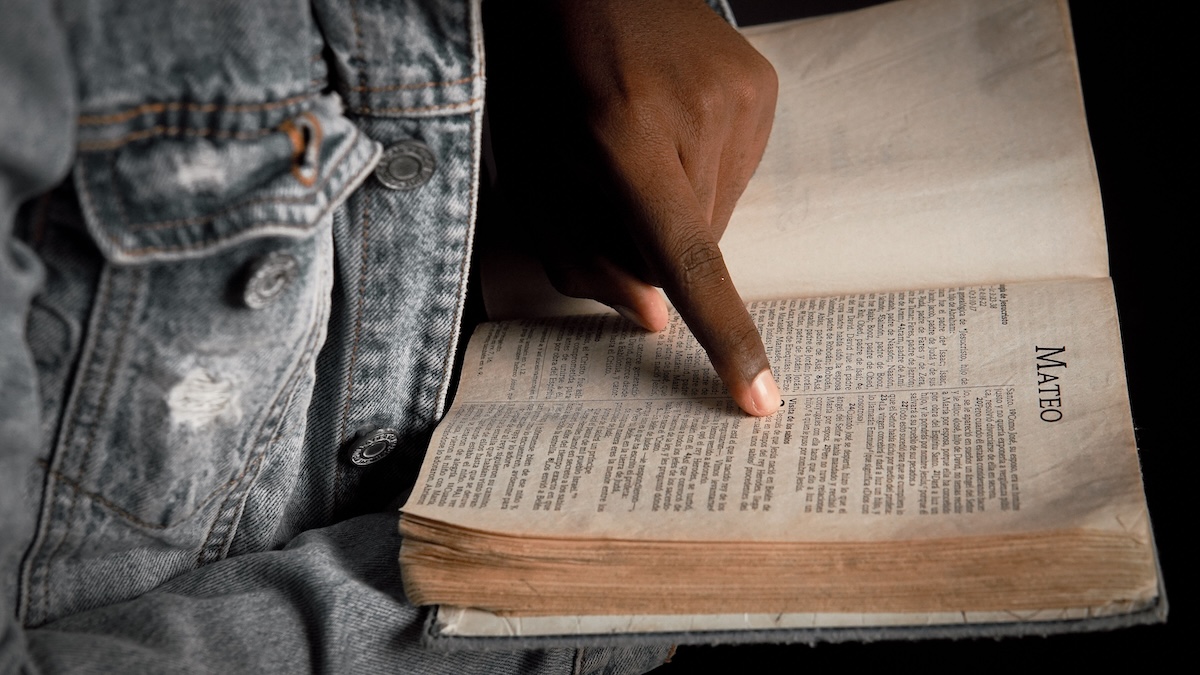
Today I’m beginning Part 1 of a three-part series on Christian discipleship, to include Bible study, prayer, and missional living. The title of the episodes come from an adage a youth pastor drilled into me during high school: Stay in the book. Stay on your knees. Stay after souls.
I hope as you listen to Episode 115 on Bible Study Basics (or read the transcript) that you’ll discover fresh tips, tools, methods, and motivations for reading God’s Word and hiding it in your heart.
Show Notes
VERSES CITED:
- James 1:5 – “But if any of you lacks wisdom, let him ask of God….”
- Acts 8:30-39 – “…Do you understand what you are reading?”
- John 3:16 – ““For God so loved the world, that He gave His only begotten Son….”
- Jeremiah 33:3 – “Call to Me, and I will answer you, & show you great & mighty things….”
- Psalm 119:160 – “The entirety of Your word is truth….”
- 2 Timothy 3:16 – “All Scripture is inspired by God and profitable for teaching…”
- 1 Corinthians 13:4-8 – “Love is patient, love is kind….”
- John 14:26 – “…the Holy Spirit … will teach you all things….”
- John 16:8 – “…convict the world regarding sin, and righteousness, and judgment….”
- John 16:13 – “…when the Spirit of truth comes, He will guide you into all truth….”
- 1 John 2:27 – “As for you, the anointing which you received from Him abides in you….”
- Philippians 1:6 – “…he who began a good work in you will bring it to completion….”
- Psalm 19:1 – “The heavens declare the glory of God; the sky displays his handiwork….”
- Romans 5:8 – “…while we were yet sinners, Christ died for us.”
- John 1:1-4 – “In the beginning was the Word, and the Word was with God….”
- Prov. 14:12 – “There is a way that seems right to a man, but its end is the way to death.”
- John 14:6 – “I am the Way, the Truth, and the Life….”
- Jeremiah 17:9 – “The heart is more deceitful than all else….”
- Luke 9:23 – “If anyone wants to come after Me, he must deny himself….”
- Matthew 7:13-14 – “Enter through the narrow gate. For wide is the gate and broad….”
- Psalm 25:8-9 – “Good and upright is the LORD; therefore He shows sinners the way….”
- Psalm 119:98-100 – “Your commandments make me wiser than my enemies….”
- James 3:17 – “The wisdom from above is first pure, then peaceable, gentle….”
- James 3:15 – “…but is earthly, natural, demonic.”
- 1 Corinthians 1:26-31 – “…chosen the foolish things of the world to shame the wise….”
- Romans 12:2 – “Do not be conformed to this world, but be transformed….”
- Ephesians 5:26 – “cleansed and sanctified and conformed to the image of Christ….”
- 1 John 2:16 – “…the lust of the flesh, the lust of the eyes, the boastful pride of life.”
- Philippians 3:7-10 – “…whatever things were gain to me, these things I count as loss….”
- Acts 7:11 – “…examined the Scriptures every day to see if these teachings were true.”
- Romans 14:1-6 – “Accept him whose faith is weak, without passing judgment….”
- Galatians 1:6-9 – “…you are so quickly deserting the one who called you….”
- Acts 4:12 – “…no other name under heaven given…whereby we must be saved.”
RELATED LINKS:
- Prayer Guide for Bible Readers
- Bible Study Fellowship
- One-Year Bible Reading Plan – available as a free printable chart or handy bookmarks
- Free Books of the Bible Printable
- More Free Printable Prayer Guides
- Daily Bible Study Notes Template
- New American Standard Bible (NASB)
- New King James Version (NKJV)
- English Standard Version (ESV)
- New International Version (NIV)
- YouVersion Bible App – great for listening to audio Bible; parents should be aware app includes messaging capabilities and may want to discuss guidelines for use with their children before turning them loose with it
- Verses Bible Memory App – app my daughter’s use for reviewing memory verses
- Fighter Verses App – this is the Bible memory app my son uses
- BibleHub – great Bible study tool, especially for cross-referencing, consulting commentaries, looking up words in original language
- Women of the Word by Jen Wilkin
- Sermon Notes Template for Kids
- Ep 28: Bible Memory Tips
- EP 85: Memorize Proverbs 3 with Me
- Charlotte Mason’s method of Scripture memory
- Awana – a church program teaches memory verses to children
- Bible Memory Resources for Families – resources I made to encourage my kids and grandkids to memorize scripture
STAY CONNECTED:
- Subscribe: Flanders Family Freebies -weekly themed link lists of free resources
- Instagram: @flanders_family – follow for more great content
- Family Blog: Flanders Family Home Life – parenting tips, homeschool help, printables
- Marriage Blog: Loving Life at Home– encouragement for wives, mothers, believers
- My Books: Shop Online – find on Amazon, at Barnes & Noble, or through our website

Stay in the Book: Bible Study Basics
Full Transcript of Episode 115
Hello, friend. Welcome to Episode 115 of Loving Life at Home. As I promised last week, in the coming months, I plan to work my way through some of the questions that have been piling up in my inbox all summer. I’ve grouped those messages according to topic, so I can answer related questions at the same time.
And the topic I’ve chosen for today is Bible Study basics. That’s because I’ve gotten several questions lately along that vein. And also because I had an amazing youth pastor during my high school years that drove home the adage:
“Stay in the book. Stay on your knees. And stay after souls.”
David drake
In fact, I’m planning to do a three-part series on all three of those imperatives, beginning with “Stay in the Book,” by which je definitely meant to faithfully read and study and memorize and meditate on the Bible.
So let’s get to it:
We’ll start with a question from a reader named Chloe. She writes:
“Hi! I just discovered your website and I love it! I have been a Christian for many years now, but the hardest thing I struggle with is Bible study. I want to do it, but I never know where I should start. And how do I really study the Bible? I have a commentary, but it only explains so much. I guess my biggest question is how to do I understand God’s message when I am reading the Bible?
Those are all great questions!
- Where to start
- How to study, and (most importantly),
- How to make sense of what you’re reading. How to understand God’s Word
Well, my advice for both the first and the last question would be to start by praying. Pray that God would help you understand.
He promises to give wisdom to all who ask (James 1:5). And if you will begin your daily reading by praying God will give you eyes to see, ears to hear, the wisdom to understand, and a willing heart to apply what you learn to your own daily life, I am confident the LORD will honor that request.
He did this for the Ethiopian eunuch. As we read in Acts 8:26-39, the eunuch was struggling to understand the book of Isaiah and longing for guidance, and God sent Phillip to explain the passage to him and to show him how the prophecy pointed to Jesus.
I love the story of the Buddhist monks in the mountains of Tibet who found a gospel tract with the verse John 3:16 on it, which of course reads,
“For God so loved the world that He gave His only begotten Son, that whosoever believes in Him should not perish but have everlasting life.”
John 3:16
These Tibetan lamas knew nothing of the Bible beyond this single verse, and yearned to learn more about this God who loves, so for FIVE years, they prayed that God would send a messenger to explain it to them.
Well, God eventually sent Gladys Aylward to do exactly that. She and a companion were journeying through those same mountains and stopped along the way to rest. Gladys prayed for food and shelter. Her companion prayed that God would send them a person who needed to hear about Jesus.
After their prayers, they began to sing hymns, and one of the Buddhist lamas overheard them singing and knew immediately his prayers for a messenger had been answered, and took them back to the monastery where they stayed several days sharing the gospel, explaining scripture, and answering questions, as the monks lined up outside their room for an opportunity to speak with them.
Pray for Understanding
Well, God stands ready and willing to answer our prayers for clarity and understanding, as well, as He has promised in Jeremiah 33:3,
“Call to Me, and I will answer you, and show you great and mighty things, which you do not know.”
Jeremiah 33:3
Interestingly, some time ago I received a message related to Bible study and prayer from a reader named Annie. She writes:
I truly love all the prayer guides you have for so many things. I was wondering if you have one for people trying to keep on track with daily scripture reading or bible study?
Well, I didn’t have any such thing at the time, but thought it was a great idea. That is what prompted me to come up with my free printable Prayer Guide for Bible Readers which I’ll link in today’s show notes.
It’s packed with even more scripture verses related to God’s promise to give wisdom and understanding and answers to those who seek Him, read His Word, and ask good questions.
And, like so many of my prayer guides, this one takes the form of an acrostic:
B-I-B-L-E stands for…
As you prayerfully open God’s inspired, inerrant, infallible Word, humbly ask that He’d give you…
B: a Burning desire to read His Word consistently
Jesus said man should not live by bread alone, but by every Word that comes from the mouth of God. So ask Him to instill in you a love for the Word. And that He would help you read it, memorize it, and meditate upon it day and night. (Matthew 4:4; Psalm 119:11, 97; Psalm 1:2)
Also ask Him for…
I: Insight to understand what you read
In addition to praying for wisdom, which – as I mentioned before – He has promised to give generously to all who ask, ask also that He would open your eyes, so that you may see wonderful things from His law. Pray too that He would grant you more insight than all your teachers as you dwell on Your testimonies, which is what He did for King David (or whichever Psalmist wrote Psalm 119). (James 1:5; Proverbs 2:6; Psalm 119:18, 99)
The next B stands for…
B: a Belief that the Bible is absolutely true
My mother attended BSF – Bible Study Fellowship – for many, many years, and even taught BSF children’s classes. And one of the very first clapping rhymes the little children learn in that program says, “The Bible is true. Absolutely true. Everything the Bible says is absolutely true.”
That is certainly the perspective from which I approach Bible study. And, I tell you, having that foundational belief that the Bible is true and can be trusted makes reading and studying and learning it soooo much easier.
Unlike Thomas Jefferson, who would literally cut all the verses and passages and pages with which he disagreed completely out of his Bible.
Once you start tossing out portions of scripture, pretty soon, you’ll be scrapping the whole thing.
That’s no way to live. And no way to grow in knowledge and understanding of the living WORD of God. So pray that God – who is both faithful and trust-worthy and faithful — will help you hold fast to the confession of your hope without wavering, so that you can boldly proclaim along with the Psalmist, “The entirety of Your word is truth, and all Your righteous judgments endure forever.” (Hebrews 10:23; Psalm 119:7-8, 160)
Next, pray for…
L: a Lasting commitment to live by what you learn in God’s Word
And pray He will enable you to faithfully apply it to your life. Pray the LORD will make you like the wise man who hears His Word and obeys it, so that the Solid Rock of Jesus would form the foundation of your life, rather than the shifting sand of moral relativism. Seek to be a faithful doer of Your Word, not a deluded hearer who fails to put God’s Word into practice. (Matthew 7:24-27; James 1:22)
And lastly, pray for…
E: an Enthusiasm for sharing God’s Word with others
Pray that He would help you always be ready and willing to give a reason for the hope that lies within you. Pray that your faith would shine as a light in the darkness, and that you would boldly proclaim the gospel to the lost and offer words of encouragement to fellow believers. (1 Peter 3:15; Matthew 5:14; 2 Timothy 1:7-8; Hebrews 10:25)
All these requests are taken straight out of scripture and backed up with multiple Bible verses.
A Good Place to Start
But back to that original question, looking up the reference verses listed under each point in this prayer – or any of the other free printable prayer guides and Bible study resources I offer on my website — would be a good place to begin your own Bible study. I’ll link a few of them in today’s show notes.
Alternatively, I have a free printable Bible reading plan that I’ve used for nearly two decades to read through the Bible in its entirety once a year. I’ll link that resource in the show notes, as well.
However, if you are completely new to Bible reading, instead of trying to get through the whole thing over the course of 12 months, I’d advise you to start with one of the gospels – maybe Luke or John – and taking your time.
There are 66 books of the Bible in all, grouped into sections: Twenty-seven of those 66 books are in the New Testament:
- 4 gospels (Matthew, Mark, Luke, and John)
- 1 book of church history (the book of Acts)
- 21 letters or epistles (written by Paul, Peter, James, John, and others), and
- 1 book of prophecy (the book of Revelation).
The remaining 39 books are in the Old Testament:
- 5 books of the law (Genesis, Exodus, Leviticus, Numbers, and Deuteronomy)
- 12 books of history (Joshua, Judges, Ruth, 1&1 Samuel,etc.)
- 5 books of poetry and wisdom (Job, Psalms, Proverbs, etc.)
- 5 major prophets and
- 12 minor prophets
The one-year Bible reading plan I use jumps around from section to section: I read from the gospels on Saturdays, the letters on Sundays, the Law on Mondays, History on Tuesdays, Books of poetry and wisdom on Wednesdays and Thursdays, and Prophecy on Fridays – all year long.
Which I really like. It keeps me from getting bogged down in the book of Leviticus or anything like that.
And it fits how I read other books, as well. I always have several titles in play at any given time – text books, poetry, and works of literature that I read to the kids as part of our school day, an audiobook or two than I’m listening to by myself or with my husband or daughter, a couple of paperbacks I keep on the nightstand to read before bed, and –occasionally, an ebook, although I really prefer reading hard copies, so I can underline passages I want to remember and make notes in the margins. Just like I underline favorite verses and mark up the margins in my Bible.
2 Timothy 3:16 tells us,
“All Scripture is inspired by God and profitable for teaching, for reproof, for correction, for training in righteousness…”
2 Timothy 3:16
All means all, and so I definitely believe we all should read the whole of scripture. Every book, every chapter, every verse is inspired and can be used by God to teach and reprove and correct and train us in righteous living.
However, if you are just starting out, you may want to begin by reading the parts of the Bible that are easiest to understand and apply.
So I recommend starting in the New Testament. Don’t feel obligated to read more than a chapter or two a day – maybe even just a few verses. Quality counts more than quantity in this endeavor.
Start Slow & Stay Consistent
Try beginning with the gospel of John, chapter 1, verse 1, and read it straight through, however long it takes, then keep on reading that same way through the next book, the Acts of the Apostles, and then through each of the 21 letters: Romans, 1 & 2 Corinthians, Galatians, Ephesians, Philippians, Colossians… all the way through 1, 2, and 3 John and the book of Jude.
Then I’d probably save the book of Revelation for later and skip back to the very first book of the Old Testament, the book of Genesis, and read through all of that one, followed by the book of Exodus. Then either read some of the history, like Ruth, and Esther, and the books of Samuel and 1 and 2 Kings, or skip over to the books of poetry and wisdom, like Job, Psalms and Proverbs. Then, once you’ve finished all that, you can move on to the major and minor prophets and the book of Revelation.
Again, speed doesn’t matter here nearly as much as consistency.
So pray for God to give you understanding and try to read at least a little bit of your Bible every single day, even if it’s only a few verses.

Back when I was a teen, that same youth pastor who told me and my friends to “Stay in the book, stay on your knees, and stay after souls” also taught us to use a Bible study method called the 9:59 plan (which stands for 9 minutes and 59 seconds – in other words, it was something that took less than 10 minutes a day to complete); but the positive results of the time we spent studying God’s Word really piled up over time.
That was the certainly the case for me, and I suspect it will be the case for you, too, as long as you stay faithful to reading it).
In this 9:59 plan, we would make note of whatever passage we were reading at the time, write down a verse or two that resonated or stood out to us in each day’s reading. That’s recording what it says. Then we’d write a sentence or two about what those verses mean, followed by a few ideas for putting them into practice.
So, for instance, suppose my passage for the day was 1 Corinthians 13:4-8,
“Love is patient, love is kind and is not jealous; love does not brag and is not arrogant, does not act unbecomingly; it does not seek its own, is not provoked, does not take into account a wrong suffered, does not rejoice in unrighteousness, but rejoices with the truth; bears all things, believes all things, hopes all things, endures all things. Love never fails….”
1 Corinthians 13:4-8
Maybe the portion of that passage that really jumped out at me the first time I read it was “Love is patient.” So I’d write that part of the verse down on the lines provided.
Next, for what it means, I could note that loving somebody means I’m willing to wait or to be inconvenienced without becoming irritated or annoyed, and that I listen to my loved one calmly and attentively rather than being short-tempered, reactionary, or easily distracted.
Then, as for how to apply that truth to my life, I might realize that I haven’t been doing a very good job of being patient and loving toward my husband whenever I tap my foot or sigh heavily and roll my eyes or nag and complain whenever he does something I don’t like. And I could purpose, by God’s grace, to stop using such petty tactics to express my disapproval and to instead use that waiting time pray for him and for myself. Or, if the situation warrants it, I might share my concerns with him privately in as gracious, respectful, and genuinely loving way as possible.
Can you see how helpful this method would be to internalizing scripture and living in obedience to it? This way of studying Scripture is truly a transformative process – as it should be! — and is so much better than just powering through the whole of the Bible at breakneck speed just to say you did, with little to no time spent trying to understand and reflect on and digest what you are reading or ponder how it affects you in the here and now as you live your daily life.
I’m pretty sure that little 9:59 plan notebook I used back in high school has been out of print for a loooong time, but I’ve created a pretty, one-page printable that is formatted in a similar way. I’ll put a link in the show notes where you can download it for free if you’re interested.
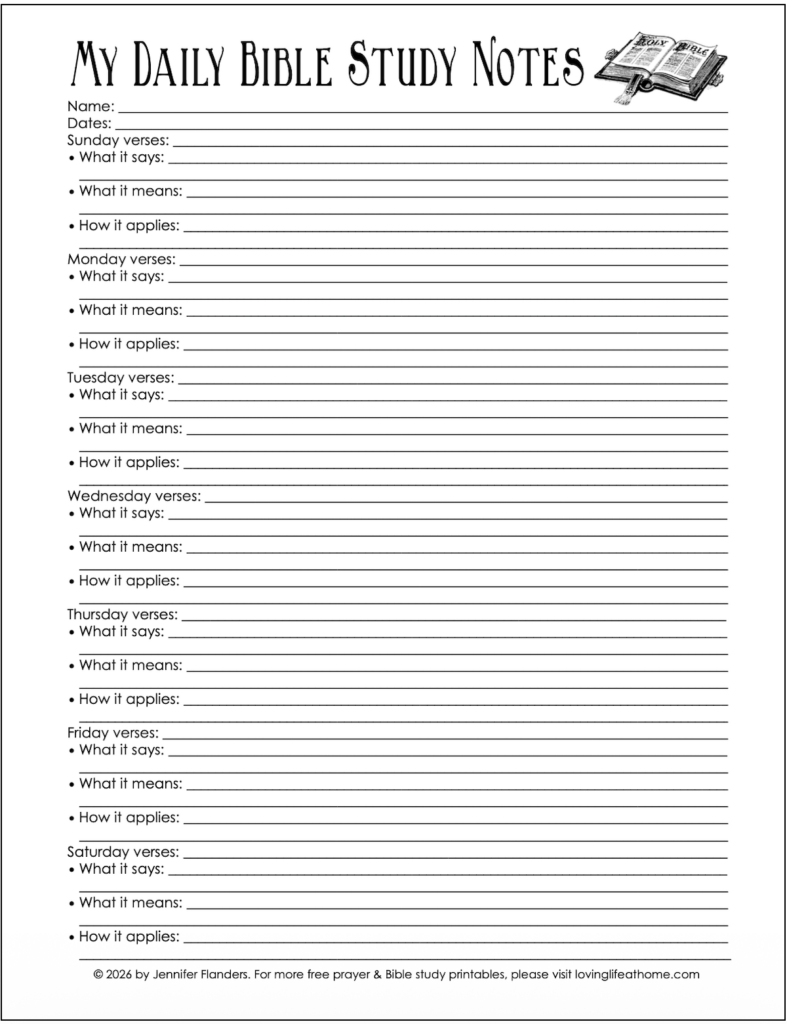
It’s a great tool for any Bible reader, but it’s especially useful for those just starting out. As you grow in your Christian walk, you may want to add sections or questions to this barebones format or create one of your own.
I know one of my daughters-in-law has been working such a Bible study template for herself for several months now. I haven’t seen the final iteration, but it sounds wonderful. And the process of thinking through how she wants to approach her personal Bible reading and the different things she wants to look for as she reads has undoubtedly been good for her. It’s helping her grow in her walk with Christ and deepen her understanding of His Word, which is the goal, right?
Choosing a Bible Translation
I guess I should back up and start with the Bible itself. I really like the NASB (New American Standard Bible). I’ve been reading that one for decades. Our church uses the New King James Version (or NKJV), which is also excellent. I have a lot of friends as well as some adult children who prefer the English Standard Version (ESV) or the New International Version (NIV). If you don’t already have a Bible, I’d recommend checking out one of these.
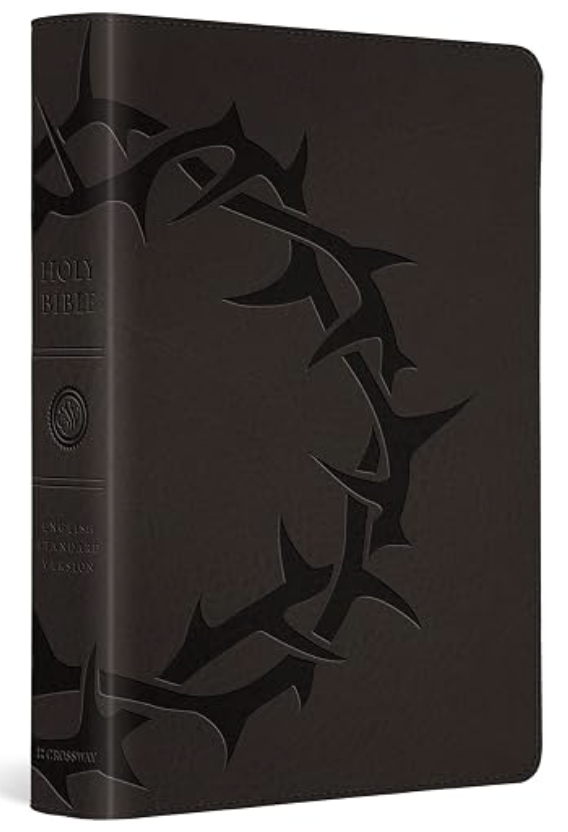
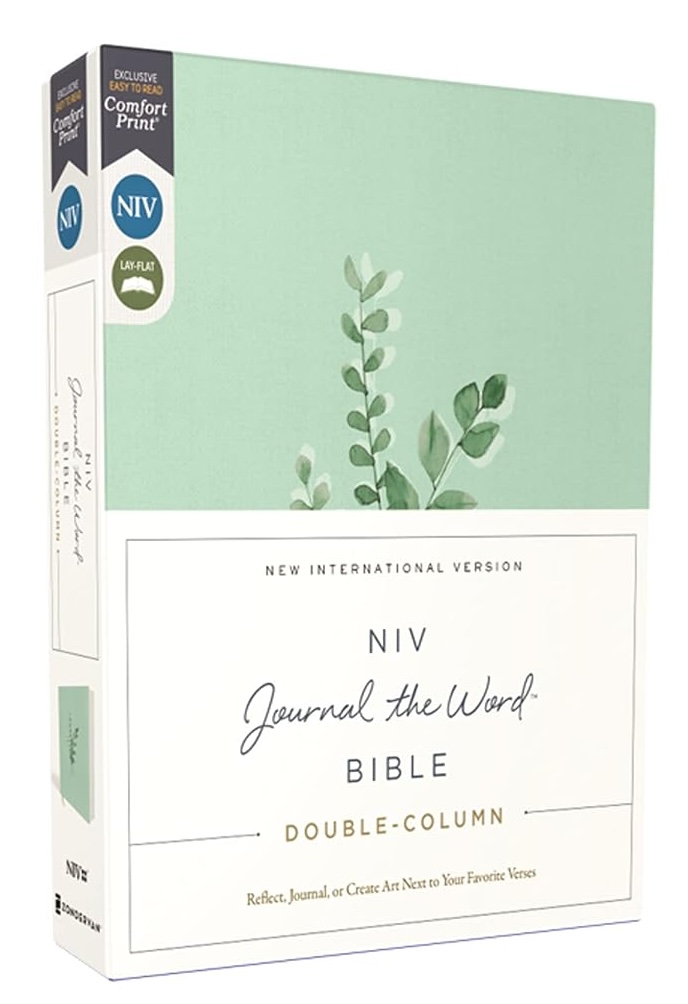
I’ll put some links in the show notes, but if you live close enough to a Christian bookstore like Mardels, you may want to go hold them in your hands and flip through them to see which suits you best as far as size, weight, binding, color, extras –like study notes, time lines, and maps — and how easily you can see and read the font.
I love having a Bible I can hold in my hands and carry to church and highlight. But some people prefer to read online. That’s okay, too.

Online Tools for Bible Study
I recently received an email from a mom who was concerned about the amount of time her teens were spending on their phones and was looking for ways to get them more interested in Bible study.
That’s a real challenge for lots of parents. I recommended she download some Bible reading apps that attempt to make personal devotions more enticing to this plugged-in generation.
A few of my older kids use the YouVersion Bible App . You can set it up to send daily verses to your notifications, and it will also read Bible passages aloud to you. My husband and I both use that feature to listen to the Bible while we’re doing chores around the house, and our kids do the same. I think there are even some one-year Bible reading plans built into that app, if they’re interested, although I’ve never tried any of those personally. To be honest, the app has a lot of features I’ve never tried personally, so don’t consider this a blanket endorsement for everything on it. But I do like the fact you can listen to God’s Word on the go – in your choice of Bible translations. That’s been great.
Also, a couple of my girls use the Verses Bible Memory App with great results. I’ll link that in the show notes. One of my adult sons uses a similar app to keep track of memory verses. If I can get him to message me a link to that one, I’ll include it, too. I’m pretty sure both the first apps I mentioned are free, so check them out.
One advantage of reading the Bible online is that it makes cross-referencing verses so much faster. And, as your eyes age, you can adjust the font to make it super big, which is much easier to read than some of the tiny print in my slimline Bibles – especially early in the dim light of early morning.
So I do a good portion of my Bible study online, as well. I really love BibleHub for that purpose. I can read and compare multiple translations all on one page, plus see a long list of cross-referenced passages, which really helps dissect more difficult passages.
It is important we don’t take verses out of context, and that we use a biblical hermeneutic: We need to let the Bible interpret the Bible. In other words, when you come to a passage that is difficult to understand, you look up other passages in the Bible that address the same topic or use the same root words and get insight into the meaning of more obscure passages from the clearer ones.
Biblehub also has a Greek and Hebrew lexicon, so you can know exactly what words were used in the original language, and see how those same words were translated in other passages, which is often helpful for deepening your understanding.
Also, Biblehub offers several Bible commentaries you can reference if you wish, including Barnes notes on the Bible, Matthew Henry’s concise commentary, the Geneva Study Bible, Matthew Poole’s commentary, and others. All easily referenced at the click of a button.
If you are brand new to reading the Bible, you may not need all these lexicons and commentaries right away, but it’s nice to know they’re available online for FREE in a user-friendly format when you are ready for them.
Other Helpful Tools
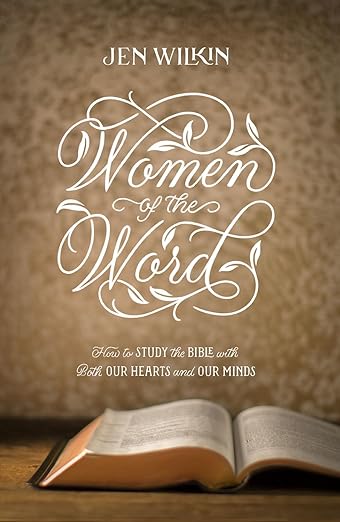
Books can sometimes be helpful, as well – although we must not get so caught up in reading books about how to read the Bible that we never actually get around to reading the Bible itself. That’s a real danger, so guard against it.
One book I do think is worth reading for those who are serious about studying the Bible is Jen Wilkins’ Women of the Word. It is short and concise, but outlines a very practical method for digging into Scripture in a way that will increase your love and understanding of God’s Word. I’ll link it in today’s show notes, so be sure to check it out if it sounds like something that might interest you.
Now, I already mentioned BSF. That would be another great starting place for a young Christian looking for help in studying God’s Word. I’ll link that resource in the show notes, as well Both my mother and my sister have attended in BSF for years and love it.
There are BSF chapters all over the country, or you can even take the classes online, which I think is a relatively new development which started during COVID. I may be wrong about it, but at least, that’s my understanding.
Many BSF groups have special classes for children, too – just like the one my mother used to teach. Those would be a great resource for families wanting to grow in this area together.
Or, if you can’t commit to weekly meetings and homework assignments, you may just want to print extra copies of that simple little Bible study template I mentioned making earlier to use alongside your older kids or teens.
It’s a little like a free template I designed years ago to help kids take notes on Sunday sermons at church. A Christian school teacher messaged me about printing extra copies of that one for all her students. She writes:
Good morning! I love your sermon notes for the kids, and I am asking permission to make copies for the children in our church, as well as my small second grade classroom for this year. I teach at a small Christian school and would like to give extra credit in Bible to those who bring their sermon notes back to me on Monday.
Thank you for your consideration!
Allison
Isn’t that a sweet idea? I told her I’d be thrilled for her to do that. I love that she’s using extra credit to motivate her students to pay attention in church! But homeschooling parents could take a similar approach with the Bible study printable to help their kids get into the habit of daily Bible reading.
We Have Another Helper Too
The thing I want you to remember with all of this is that, once you’ve given your life to Christ, you have the Holy Spirit indwelling you and teaching you and helping you to understand God’s Word. He will convict you, forgive you, and grant you victory over sin. And He will instruct and lead you in the Truth and mature you and give you all the grace and wisdom you need for righteous living! Isn’t that good to know?
- John 14:26 – “But the Helper, the Holy Spirit whom the Father will send in My name, He will teach you all things, and remind you of all that I said to you.”
- John 16:8 – “And He, when He comes, will convict the world regarding sin, and righteousness, and judgment….”
- John 16:13 – “However, when the Spirit of truth comes, He will guide you into all truth. For He will not speak on His own, but He will speak what He hears, and He will declare to you what is to come.”
- 1 John 2:27 – “As for you, the anointing which you received from Him abides in you, and you have no need for anyone to teach you; but as His anointing teaches you about all things, and is true and is not a lie, and just as it has taught you, you abide in Him.”
That doesn’t negate the usefulness of some of the tools I’ve mentioned like Bibles and lexicons and commentaries, but it should reassure you that God has not left you all on your own to make sense out of the Bible but has provided a Helper to guide and direct your study. And if you pray for clarity and wisdom and understanding and read consistently with a heart that is ready and willing to obey, then you can be confident that the very same God who began the good work of salvation in you will be faithful to continue and complete that work by teaching and sanctifying and maturing you, as well (just as He has promised to do in Philippians 1:6).
What’s Our End Goal?
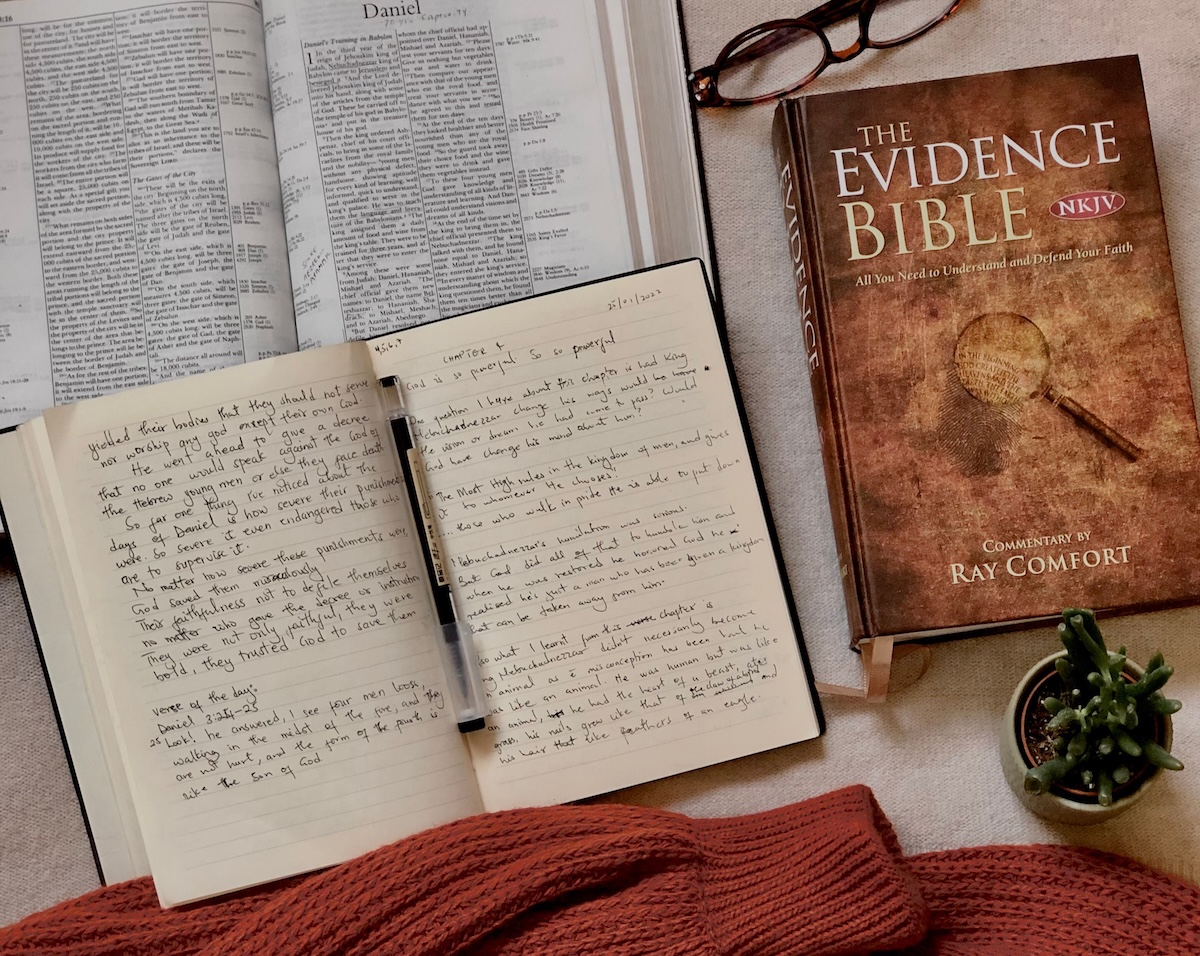
Now the next question I want to discuss on this topic actually came from one of my sons. He has been digging deeper into his own Bible study for the past several months, and he came to me and my husband one evening with what I think is an excellent question.
He asked, “What is your end goal for reading the Bible? Is it to be more knowledgeable or to better understand history or to get closer to God or to mark another book off your reading list or what?” In other words, what are we trying to accomplish through our Bible study?
That’s a great question, but a fairly easy one for me to answer. I explained to my son that my reasons for reading and studying God’s Word are four-fold:
1. Knowledge of the Holy One
First of all, I read the Bible to learn more about God and His dealings with mankind. Psalm 19:1 tells us,
“The heavens declare the glory of God; the sky displays his handiwork.” That’s His general revelation to us.
Psalm 19:1
But the Bible is God’s special revelation to us. From start to finish, God’s Word is a declaration of His great love for us – a love which, as Romans 5:8 spells out, He clearly demonstrates, even while we were yet sinners, by sending Christ to die in our stead.
Jesus paid the penalty for our sin – a sacrifice that was foretold in the very first book of the Bible, the book of Genesis, while our first parents were still in the garden of Eden, and a sacrifice that was celebrated as complete and victorious in the very last book of the Bible, the book of Revelation, at the marriage supper of the Lamb.
Moreover, Christ Himself is called the Living Word of God. John 1:1-4 tells us,
“In the beginning was the Word, and the Word was with God, and the Word was God. He was in the beginning with God. All things came into being through Him, and apart from Him not even one thing came into being that has come into being. In Him was life, and the life was the Light of mankind.”
John 1:1-4
The Bible is not about me. It is about Him. And I read it to know Him better.
2. Wisdom and Guidance
Second, I look to God’s Word as my source of guidance, direction,and spiritual wisdom. Proverbs 14:12 warns us,
“There is a way that seems right to a man, but its end is the way to death.”
Proverbs 14:12
I want to avoid that way at all costs! And my strategy for doing so lies, first of all, in placing my full faith and trust in Jesus Christ, who said of Himself,
“I am the Way, the Truth, and the Life. No one comes to the Father except through Me.”
John 14:6
❌ The world will tell you to follow your heart.
✅ The Bible says “The heart is more deceitful than all else…” (Jeremiah 17:9)
❌ The world will tell you “you can go your own way, go your own way.”
✅ Jesus bids us to deny ourselves, take up our cross daily, and follow Him. (Luke 9:23)
Luke 9:23 is actually one of several Bible verses my son has asked me to paint on the walls of his home. He requested I put that one right beside the back door, so he can see the reminder every day as he leaves for work.
Clearly, then, God’s way of doing things is at odds with what the world would consider reasonable – like 180 degrees in the opposite direction! – so daily reminders drawn from His Word are an excellent idea.
Christ urges us to …
“Enter through the narrow gate. For wide is the gate and broad is the road that leads to destruction, and many enter through it. But small is the gate and narrow the road that leads to life, and only a few find it.”
Matthew 7:13-14
Psalm 25:8-9 tells us, “Good and upright is the LORD; therefore He shows sinners the way. / He guides the humble in what is right and teaches them His way.”
That’s why I read and study and memorize and meditate on the Bible: because I want God to guide me in what is right and teach me His way.
And so that I can say with the Psalmist,
“Your commandments [O God] make me wiser than my enemies, for they are always with me. I have more insight than all my teachers, for Your testimonies are my meditation. I discern more than the elders, for I obey Your precepts.”
Psalm 119:98-100
The Bible differentiates between spiritual wisdom and earthly wisdom at length in the book of James. Godly wisdom is what the LORD promises in James 1:5 to give generously to everyone who asks. Later, in James 3:17, we read that “the wisdom [which is] from above is first pure, then peaceable, gentle, reasonable, full of mercy and good fruits, unwavering, [and] without hypocrisy.”
Whereas James 3:15 tells us human “wisdom” springs from selfish ambitions and bitter jealousy and is earthly, natural, and demonic.”
1 Corinthians 1:26-31 contrasts the two even further. Those verses read,
“For consider your calling, brethren, that there were not many wise according to the flesh, not many mighty, not many noble; but God has chosen the foolish things of the world to shame the wise, and God has chosen the weak things of the world to shame the things which are strong, and the base things of the world and the despised God has chosen, the things that are not, so that He may nullify the things that are, so that no man may boast before God. But by His doing you are in Christ Jesus, who became to us wisdom from God, and righteousness and sanctification, and redemption, so that, just as it is written, ‘Let him who boasts, boast in the LORD.'”
1 Corinthians 1:26-31
So, gaining clear direction and spiritual wisdom – as well as the ability to boast in the LORD — that’s the second part of my motivation for grounding myself in God’s Word.
3. Conformity to Christ
I study Scripture because I want to be conformed to the image of Christ. Romans 12:2 commands us,
“Do not be conformed to this world, but be transformed by the renewing of your mind. Then you will be able to test and approve what is the good, pleasing, and perfect will of God.”
Romans 12:2
Of course, one of the ways God accomplishes this transformation is through His Word. As I mentioned earlier, 2 Timothy 3:16 tells us, “All Scripture is inspired by God and profitable for teaching, for reproof, for correction, for training in righteousness…”
It is only by this “washing with water through the Word” as described in Ephesians 5:26, that believers are “cleansed and sanctified and conformed to the image of Christ, so that we can appear before Him without stain or wrinkle or any such blemish, but holy and blameless.”
All the things the world has to offer – what John describes as “the lust of the flesh, the lust of the eyes, the boastful pride of life” (1 John 2:16) – can be so enticing. And the pull of that current can be so strong, we get swept away almost before we even realize we’re in danger, like a rip tide pulling us out to sea where it can swallow us whole.
Reading and internalizing God’s Word changes us from the inside out, including our desires, where the things that seemed so completely enticing to us before no longer hold the same appeal.
That’s how Paul, after listing all the fleshly reasons which had formerly given him cause to boast, was able to say with sincerity,
“But whatever things were gain to me, these things I have counted as loss because of Christ. More than that, I count all things to be loss in view of the surpassing value of knowing Christ Jesus my Lord, for whom I have suffered the loss of all things, and count them mere rubbish, so that I may gain Christ, and may be found in Him, not having a righteousness of my own derived from the Law, but that which is through faith in Christ, the righteousness which comes from God on the basis of faith, that I may know Him and the power of His resurrection and the fellowship of His sufferings, being conformed to His death.”
Philippians 3:7-10
That’s what I want, too – or at least, it’s what I want to want!
And so I keep reading God’s Word and hiding it in my heart, knowing that is one of the means of grace He uses to make us more like Jesus.
4. Spiritual Discernment
The fourth reason I read my Bible is so I will be better able to differentiate truth from falsehood.
This is why, in addition to any in-depth topical studies I personally do and any exegetical preaching through chapter and verse I sit under at church, I also try to read through my Bible cover to cover at least once a year.
Because I know that the more familiar I am with God’s Word, the easier it will be for me to recognize and reject anything that doesn’t line up with what He says there.
I want to be like the Bereans described in the book of Acts (Acts 7:11), who “received the message with great eagerness and examined the Scriptures every day to see if these teachings were true.”

That’s what all believers need to do. We need to hold up everything we see and read and hear and learn to the light of Scripture and examine it for cracks. And that should include everything we are taught at church (and everything read in Christian books and blogs or hear on Christian podcasts).
The Bereans were testing what the apostle Paul was teaching, and holding him accountable. Should we do less?
I’m not saying we should break fellowship over matters of opinion or taste. Not at all! But when presented with anything that contradicts what the Bible clearly teaches, we should stand against it and point whoever is promoting that idea back to the Truth of Scripture.
In other words, we should stand firmly on the Word of God in all our interactions with one another. I definitely want my readers and listeners to test what I write and say against Scripture. And I appreciate hearing from those who think I’m in error, along with biblical support for why they believe it.
So far, such correspondence has been limited to minor doctrinal differences that are non-salvific. In other words, Christians may differ on which holidays should be celebrated and which should be ignored or whether musical instruments should be used during worship or what foods are permissible to eat and which should be avoided.
Of these kinds of disagreements, Paul writes in Romans 14:1-6,
“Accept him whose faith is weak, without passing judgment on his opinions. For one person has faith to eat all things, while another, who is weak, eats only vegetables. The one who eats everything must not belittle the one who does not, and the one who does not eat everything must not judge the one who does, for God has accepted him. Who are you to judge someone else’s servant? To his own master he stands or falls. And he will stand, for the Lord is able to make him stand. One person regards a certain day above the others, while someone else considers every day alike. Each one should be fully convinced in his own mind. He who observes a special day does so to the Lord; he who eats does so to the Lord, for he gives thanks to God; and he who abstains does so to the Lord and gives thanks to God.”
Romans 14:1-6
So we must extend lots of grace to our fellow believers in these secondary and tertiary issues. But some issues are far more significant than whether we eat shrimp or put up a Christmas tree.
Paul touches on this fact in Galatians 1:6-9. There he writes,
“I am astonished that you are so quickly deserting the one who called you to live in the grace of Christ and are turning to a different gospel— which is really no gospel at all. Evidently some people are throwing you into confusion and are trying to pervert the gospel of Christ. But even if we or an angel from heaven should preach a gospel other than the one we preached to you, let them be under God’s curse! As we have already said, so now I say again: If anybody is preaching to you a gospel other than what you accepted, let them be under God’s curse!”
Galatians 1:6-9
As you can see, Paul uses much stronger language when addressing these foundational issues as compared to matters of preference. He says that if somebody distorts the clear gospel teaching of Scripture – namely that salvation comes only by grace through faith in our risen LORD and Savior, Jesus Christ, “for there is no other name under heaven given among men, whereby we must be saved” (Acts 4:12) – that anybody who denies that fact and/or teaches something contrary to it is to be accursed.
Sadly, we’ve known of churches that break fellowship over inconsequential matters like carpet colors or clothing styles or music preferences, but will simultaneously tolerate all manner of false doctrine which is in direct opposition to the clear teaching of Scripture.
And, when you see such things, you really have to wonder, do these people ever actually read their Bibles? And, if they do, do they even really believe what God’s Word clearly teaches?
I want the Bible to be foundational to everything else I do in life. It should form the basis for everything else I do and say and think and believe, and for how I relate to those around me. And so that is another reason I read it, year after year, over and over and over.
Those four reasons are also why I choose to memorize large portions of Scripture and routinely review and meditate on them. It’s because I know the more I fill my heart and mind with the Biblical truth, the more like Christ I will – hopefully – become.
Committing Bible verses to memory allows me to think God’s thoughts after Him. That’s good training. Because the more my thoughts are occupied with Scripture, the less room there will be for entertaining for anger or anxiety or fear or pride or any other bad attitudes that might otherwise dominate my attention.
I’ve done two entire podcasts on the topic of Bible memorization, which I’ll link in today’s show notes, but I’d also like to share another message I received from a Canadian friend of mine named Katie. She writes:
Jennifer,
Psalm 119 is [a passage] I’ve been dreaming of memorizing. One of my kids has read David Livingston’s biography and told me that he memorized Psalm 119!
Here are some methods I’ve tried:
1) Years ago I memorized 2-3 chapters of James by printing it out, one chapter per page, laminating each one, then propping it up on the windowsill to see while I washed dishes. I alternated between reading aloud and reciting from memory until I had it down. [But] this was not the easiest method.
2) Singing Scripture is by far the best method we’ve found, but is difficult for me to apply to long passages. My daughter plays violin, so we often put Scripture to the familiar tunes of the songs she plays (often a fun fiddle tune!).
3) Reciting Scripture to a rhythm – like clapping a beat or to the rhythm of your steps as you walk or run. This is a new method for us but seems to work well. Another variation of this could be putting actions to the verse.
4) Depend on God’s promise to bring His Word to mind as needed! My husband shared the method with me that he learned from a Bible teacher – work on memorizing a passage every day for a week, then leave the remembering up to the Holy Spirit.
5) Many years ago we found Charlotte Mason’s method of Scripture memory that we still use to memorize verses during mealtimes. We find it works very well.
Thanks so much for your reply. I will watch for your tips. I’m so thankful that I was in Awana as a kid. I still remember those verses I memorized from ages 4-12.
Katie
Well, I feel the same way about the memory work I did when I was that age. It was so much easier to memorize back then and have the verses stick than it is now. Really almost effortless by comparison. Which is one reason I make a point to challenge my kids and grandkids to memorize lots of Bible verses and reward them when they do! I’ll link some of the resources I use for that in today’s notes, as well.
And I think that about wraps up everything I have to say for now on the topic of Bible study. I hope that, if you haven’t already established this as a daily routine, you’ll begin right away. Stay in the book! That’s great advice, no matter how old you are. I hope you’ll come back next week when we’ll be discussing the power of prayer in part two in this series: Stay on your knees. Until then, may God bless and keep you and lavish His blessings upon you as you seek Him with your whole heart.